

How To Draw Brown People Digital Art
Alphabetize
- Introduction
- Color Palette
- Base Colour
- Shading
- Blush
- Highlights
- Reflected Calorie-free Outcome
- Different Skin Colour Palettes
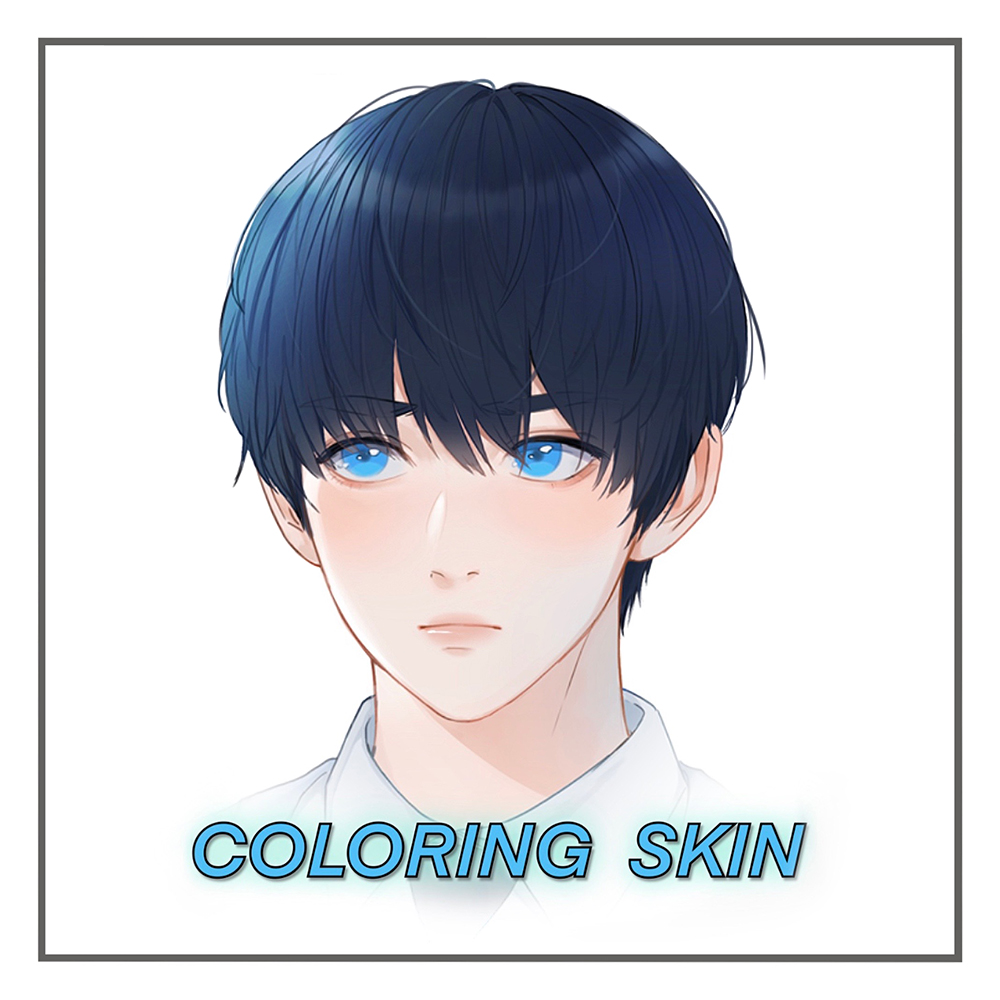
INTRODUCTION
Coloring skin is one of the most important parts in a drawing! Information technology can be very hard sometimes, particularly if you can't choose the right colors and tools for it! That's why I decided to make a small tutorial showing how I colour skin using Prune Studio Paint. I promise you enjoy the tutorial and find information technology helpful!
COLOR PALETTE
Skin has way too many tones. Information technology can be very light, very dark, or somewhere in between! I unremarkably use calorie-free-reddish color tones for my drawings, so I decided to cull this palette for today's tutorial as well.
The post-obit picture shows which colors are used for what office in the face. I will be explaining more about them later!
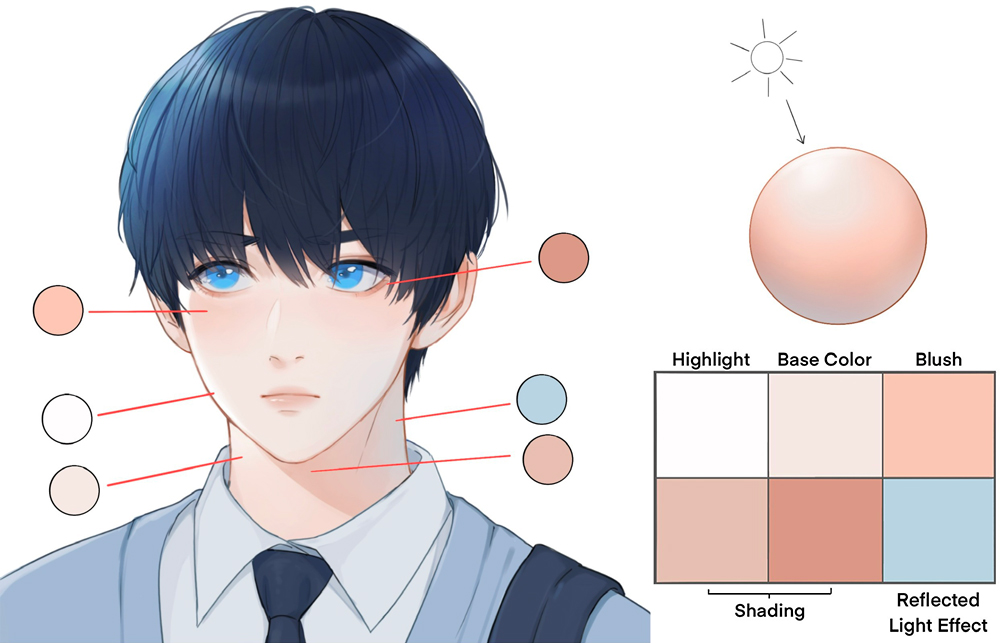
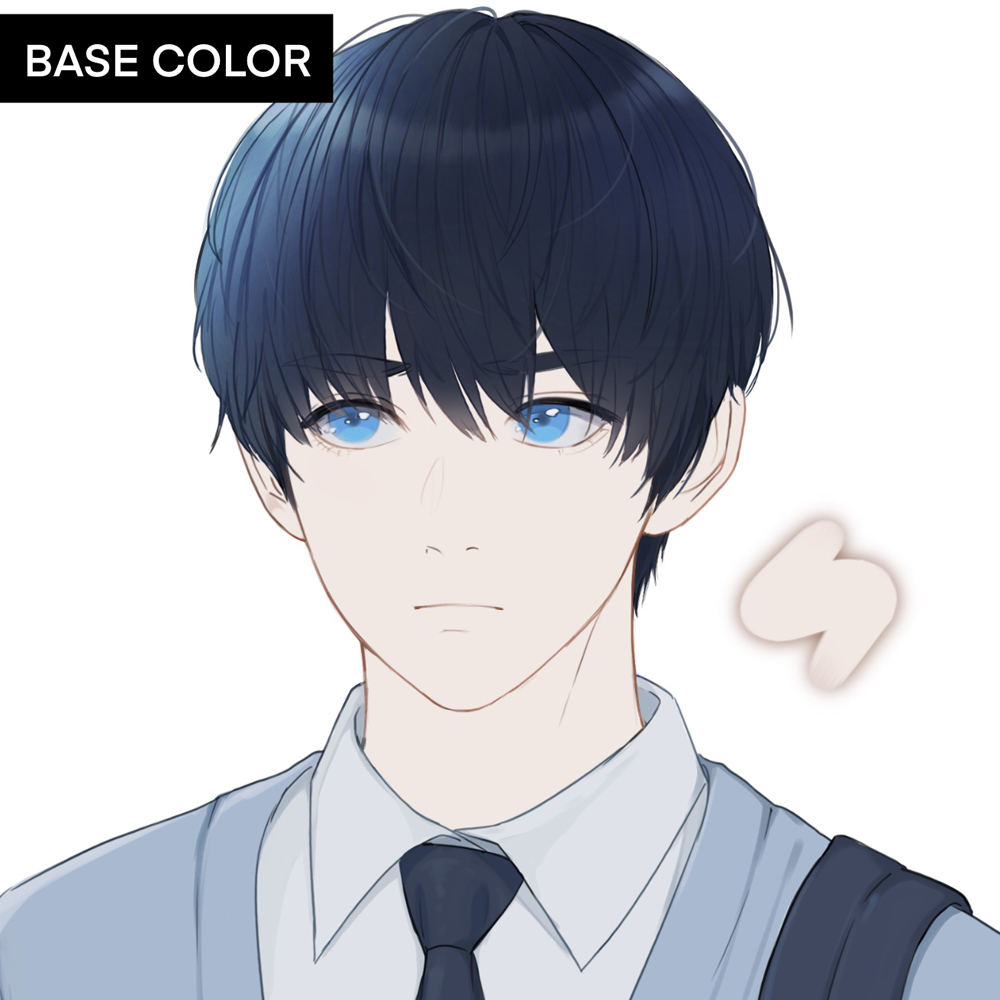
BASE Colour:
Fill the area you want to color skin in with the base of operations colour first! Brand sure you don't color outside your lines.
The base color should be brighter than the final peel tone that yous want to have. This is considering nosotros will add darker shading subsequently!
Step 1:
Create a new folder (SKIN) and add a layer (Base) to it.
Brand certain to go along the Skin folder at the very bottom, because we want to color under the lines and not over them.
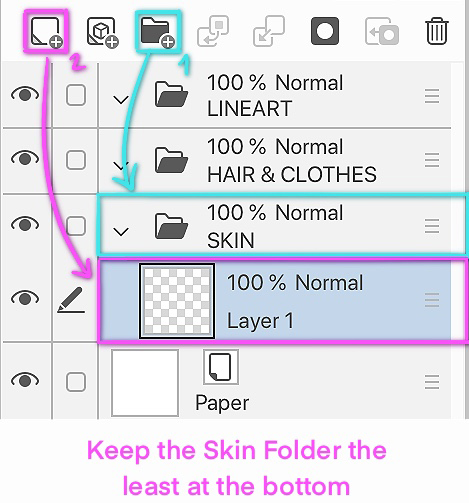
Quick Tip:
If you give your folders and layers names, it will exist easier and faster for yous to observe your layers.
Stride 2:
Choose your tool. For the base of operations color, I use Turnip Pen on 100% Opacity. There are many other brushes that yous can use. These should be hard brushes then you lot tin can color the area completely without leaving any transparent areas.
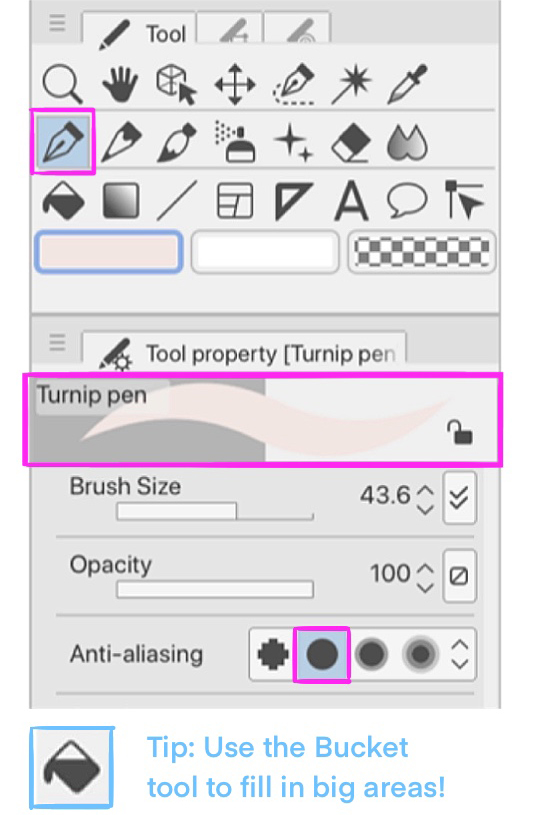
Step 3:
Pick the colour and fill the area.
SHADING
To exist able to shade, y'all have to inquire yourself: where should the light come from?
For this tutorial, I desire the lighting to come up from above on the left corner.
Footstep 1:
Create a new layer (SHADING) above the first layer (Base of operations)
Click on the icon for Clip at layer below. This will confine the coloring inside the base colour surface area only, which makes the coloring easier without worrying about it going out of the lines!
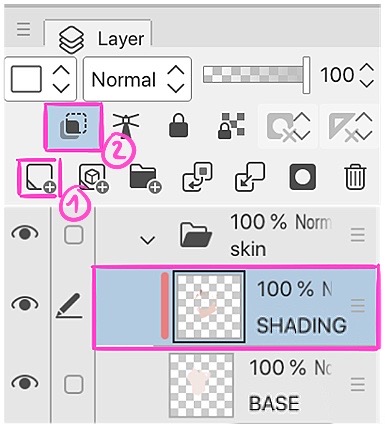
Pace 2:
Choose your tool. For the shading role y'all can cull whatever brush yous're comfy using! I personally savour using the Watercolor brush the about.
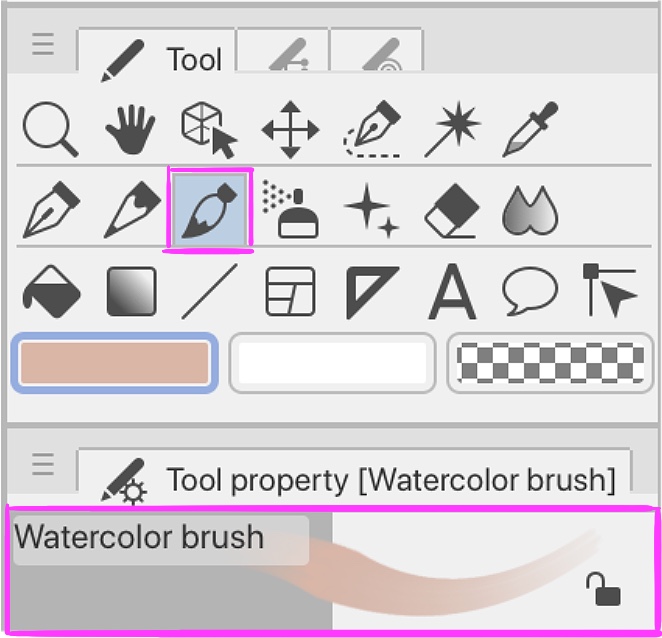
Step 3:
For shading, it's always proficient to utilize more than i color. It volition make your drawing more than pleasing to look at and less boring!
The colors yous choose for shading should be darker than the base color.
Usually, I use two tones and sometimes mix between them to create more tones.
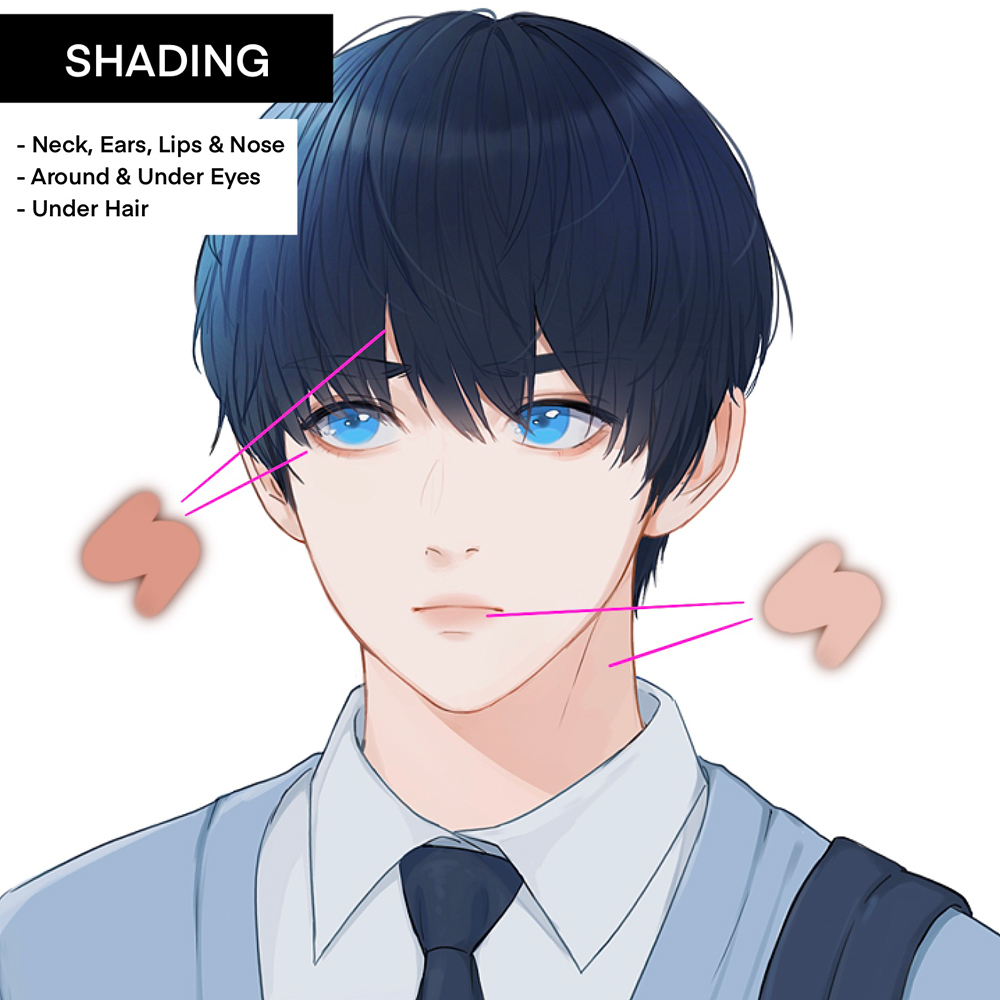
Areas I add shading to:
- On the optics: Get-go I use the bright tone around the optics and and so add the darker tone on the top and lesser eyelids
- Under the nose
- On the lips: I like coloring the lips darker from the middle and brighter toward the edges, this will make the lips expect very soft
- On the nose: I use the brilliant tone outside the ears and dark tone within
- On the neck: The light is coming from the left, which means the shading should exist on the right side of the neck
- On the forehead under the pilus: I will explain this part in the next film.
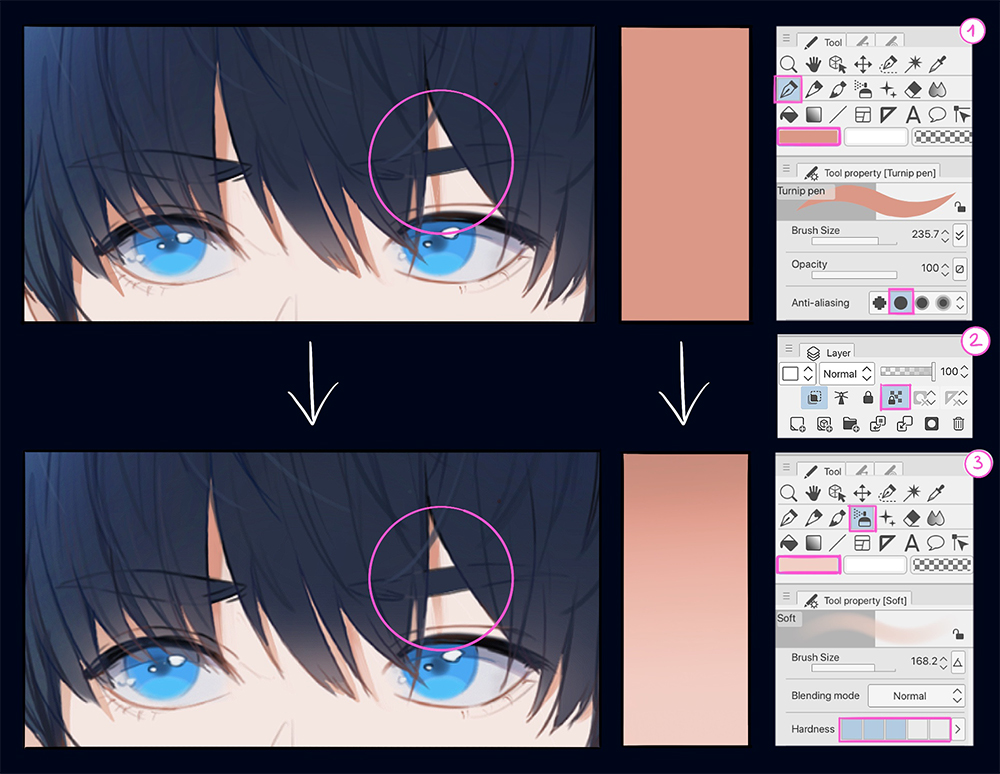
- Using Turnip pen in a dark tone, I draw the shadow nether the hair
- Lock the layer
- Using Soft Airbrush in a light tone, I color the bottom part of the shadow to go far await more realistic
BLUSH:
Blush makes your drawings expect softer and cuter. You lot can add together it on whatever part of the body depending on your style!
Examples:
- Cheeks (near common)
- Nose
- Elbows
- Knees
- Fingers
- Shoulders
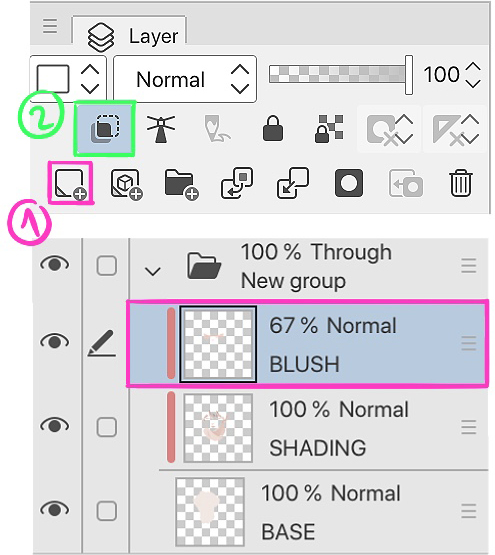
Step i:
Create a new layer (Blush) over the previous layer (SHADING)
Click on the icon for Clip at layer beneath.
Stride 2:
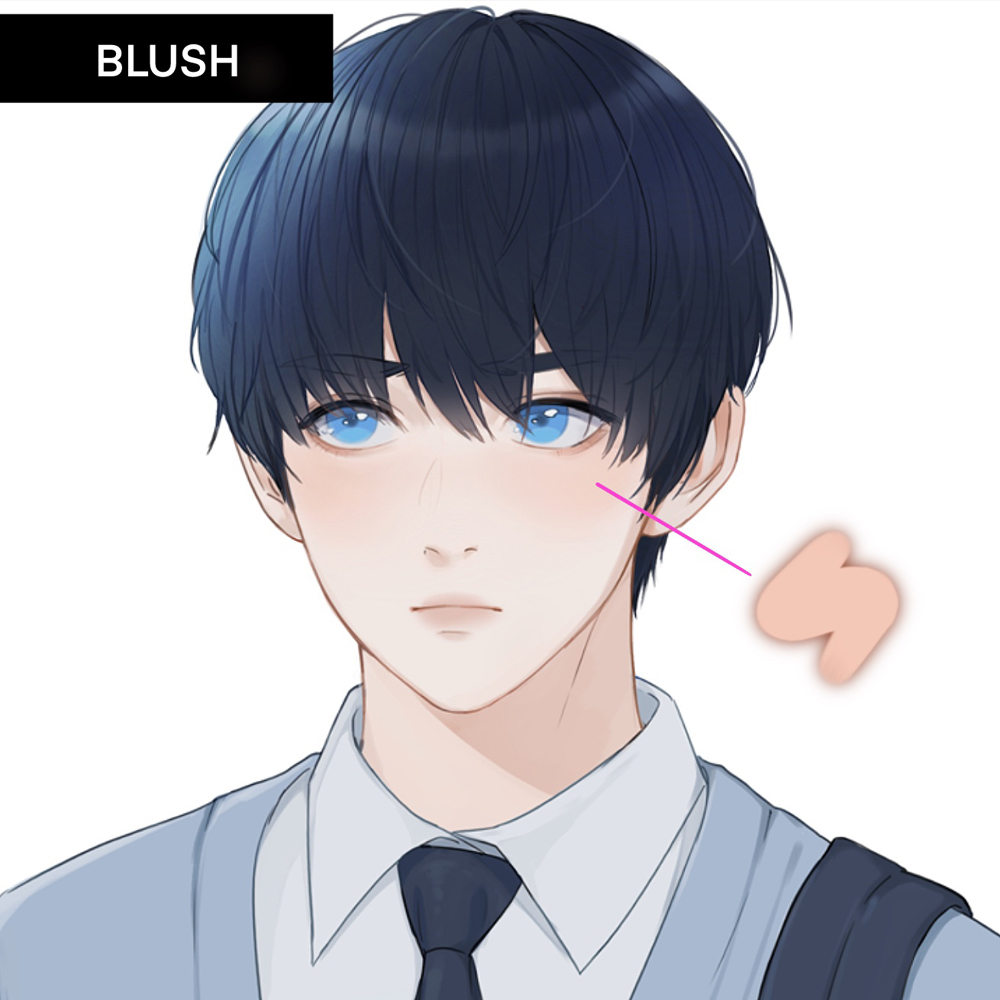
Pick the color. For blush, I like using low-cal reddish tones.
Footstep 3:
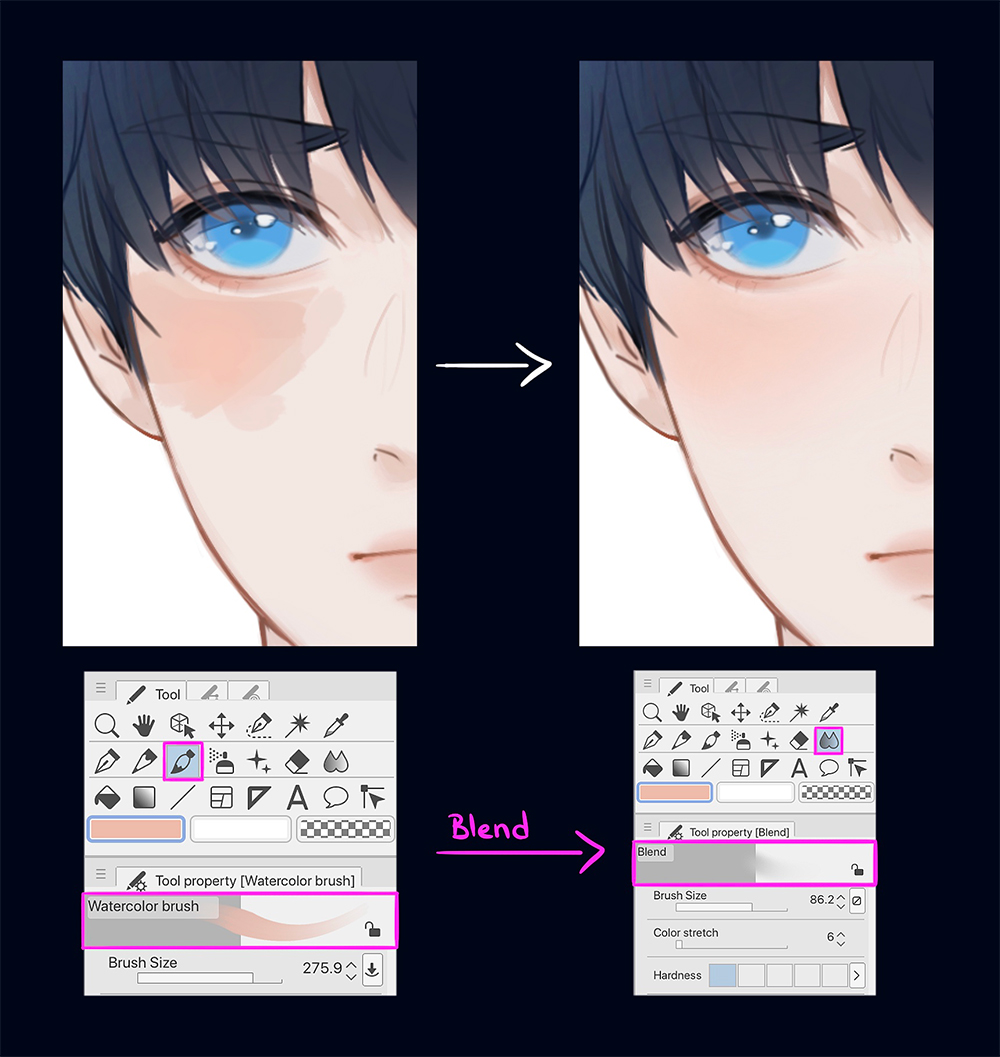
Choose your tool. I'll employ the same Watercolor Brush as for shading!
Add some blush on the cheeks and any other parts yous like
Using the Blend tool, try to smudge information technology from the edges only to brand it await soft. (Communication: the bigger the brush is, the faster and cleaner it blends.)
HIGHLIGHTS:
If your cartoon has shadows, that means at that place is a light as well! That'due south why we add highlights, which gives the peel a soft glow!
Pace 1:
Create a new layer (HIGHLIGHT) above the previous layer (BLUSH)
Click on the icon for Clip at layer below.
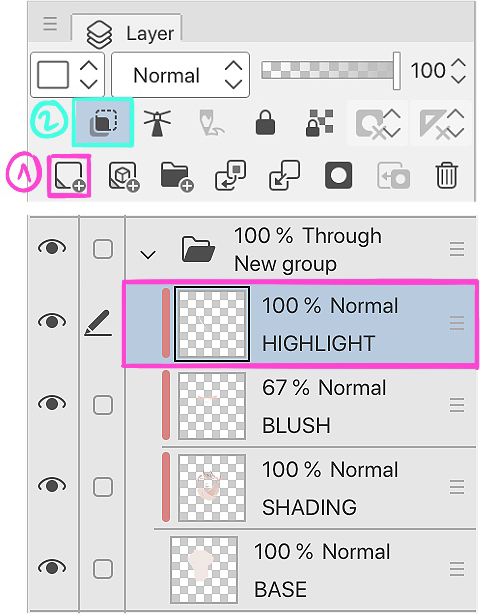
Pace two:
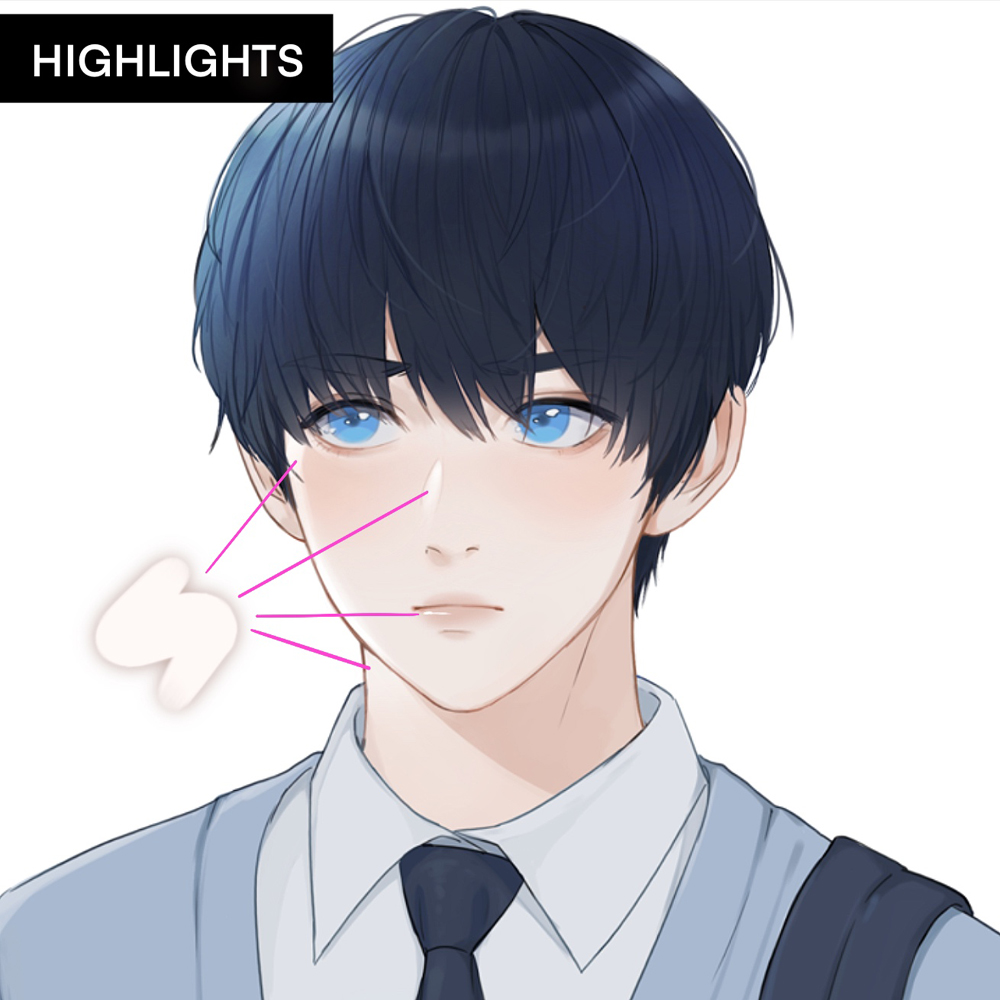
Pick the colour. For highlights, I personally simply utilize a whitish colour for this type of skin tone! For darker pare, white will look very bright, so I would get with light pinkish or brown tones instead.
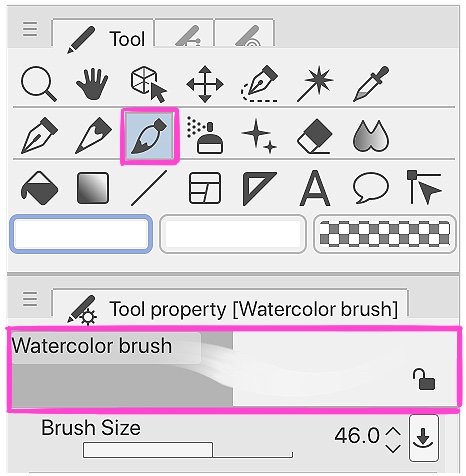
Stride three:
Cull your tool. I'll use the same brush once more which is Watercolor Brush.
You're free to use whatsoever brush you're comfortable with. Information technology always depends on your style. If you want the drawing to look smoothen, use soft brushes. If you want it to look sharp, use hard brushes.
Add the highlights on the parts where the low-cal comes from. For this drawing, the light is coming from the left.
I put highlights on the olfactory organ, cheeks, lips, and neck.
You tin also use the Blend tool to blend some parts if needed.
REFLECTED LIGHT Issue:
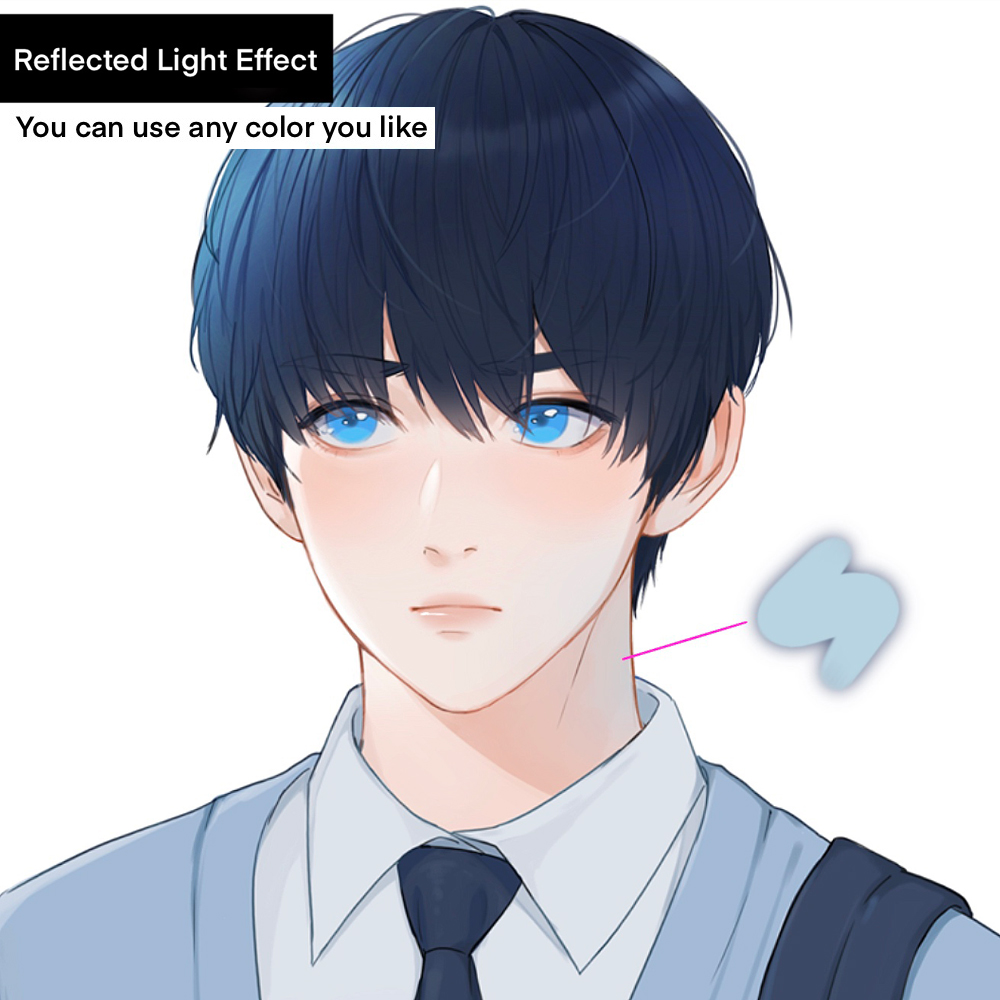
To make your drawing more than realistic, it'southward ever nice to put reflected lighting on it. This appears in the darkest shadows, caused by refracted lite from nearby surfaces. The color depends on the surround, such as clothing, objects, and even the heaven.
Step 1:
Create a new layer (REFLECTED Low-cal Event) over the previous layer (HIGHLIGHT)
Click on the icon for Clip at layer below.
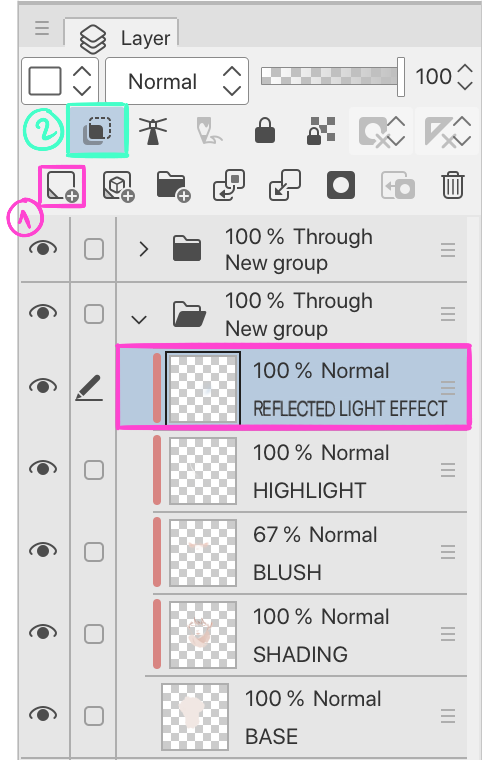
Stride 2:
Pick the color. For the reflected light result, I choose the color depending on the drawing. This drawing is cold and has lots of blue in it, then I thought the blue light effect volition suit information technology the best.
You lot tin can e'er use any color or even multiple ones! But always make sure that the tone you chose fits well to the skin tone!The light issue should always be a scrap lighter than the area you're going to add on.
Step 3:
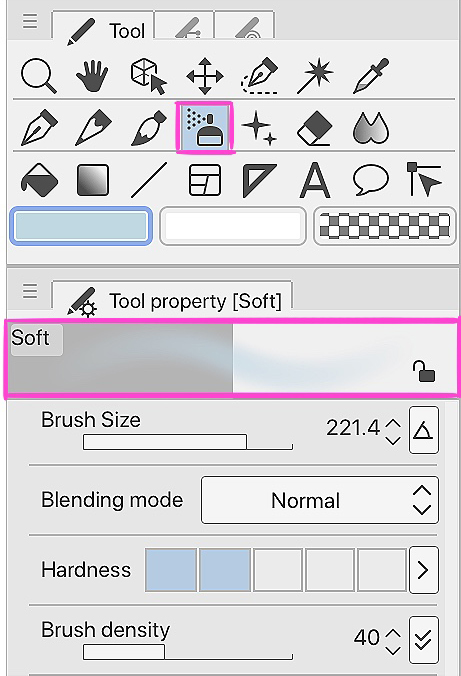
Choose your tool! For this step I'll go with Soft Airbrush. I call up information technology does the job perfectly. Just once again, you're ever free to endeavor whatever brushes you want.
You tin can put this light event on any part you like! I personally recall information technology looks the best in the nighttime shading parts, which is the neck.
Different Peel Color Palettes:
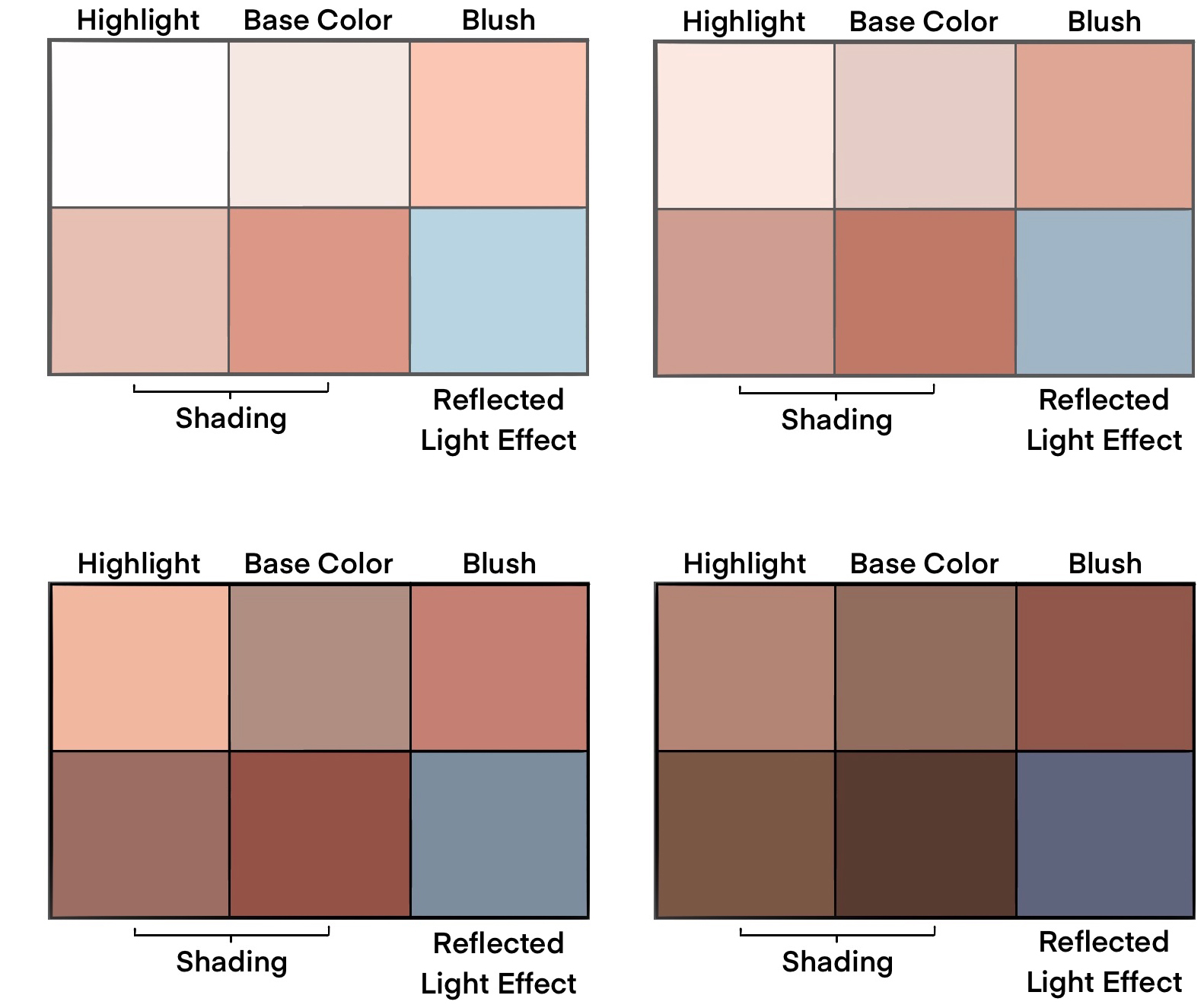
Hither are 4 different peel palettes for you! There are way too many skin tones, so this is just a few examples. You tin can ever create your own palettes and colors.
This is the end of my peel coloring tutorial! I tried to make information technology equally simple as possible and easy for you lot to empathize. I hope you lot learned new techniques and things today!
There is ever more to acquire and discover! Prune Studio Paint is definitely amazing and easy to use in one case you acquire more most it.
Call up to practise a lot and have fun!

Source: https://www.clipstudio.net/how-to-draw/archives/161037
Posted by: nolinwounamed1983.blogspot.com
0 Response to "How To Draw Brown People Digital Art"
Post a Comment